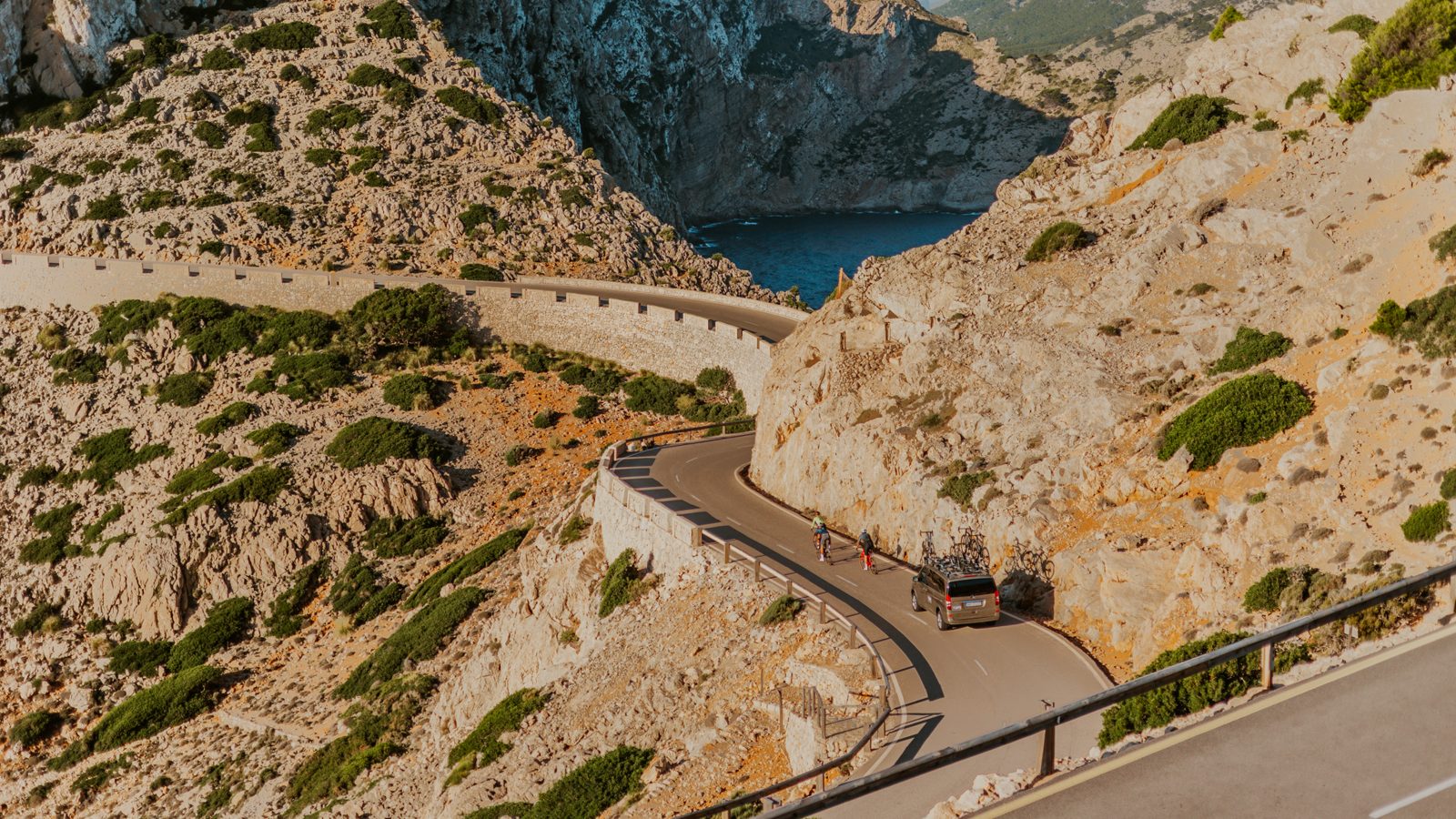
In the last week of October, Zwift launched Zwift+, a premium tier with an AI coach and filmed real-world routes, priced at about €30 a month. Cycling Weekly ran an "indoor cycling week." Cyclingnews published a debate titled "Indoor cycling is boring, discuss," in which one editor said he'd "rather pull my nails out" than ride the trainer.
For most of our guests, this is the week the garage door closes. Daylight is gone in Boston, Manchester and Munich by five o'clock. The trainer is a reasonable answer to that problem.
We'd like to offer another one. Not instead of the trainer, but alongside it: one week in November or December, on an island where the roads are open, quiet, and still warm enough for short sleeves at noon.
What the trainer gets right
Let's be fair to the smart trainer, because the case for it is real. Every minute counts. There is no traffic, no puncture, no 40-minute descent in the rain. A structured 60-minute session can deliver more targeted work than two hours of outdoor riding, and the data is clean.
That is why the people who defend indoor riding in the Cyclingnews debate talk about structure, time efficiency and convenience. They are right. If you have a job, a family and a race in April, the trainer is how you keep the thread through January.
The question is not whether you should ride indoors this winter. It's whether the whole winter should look like that.
What a screen can't give you
The critics in the same debate make a point we hear from guests every spring. Riders arrive with big FTP numbers and no idea how to hold a wheel on a fast descent. A trainer builds an engine. It doesn't teach you to use it.
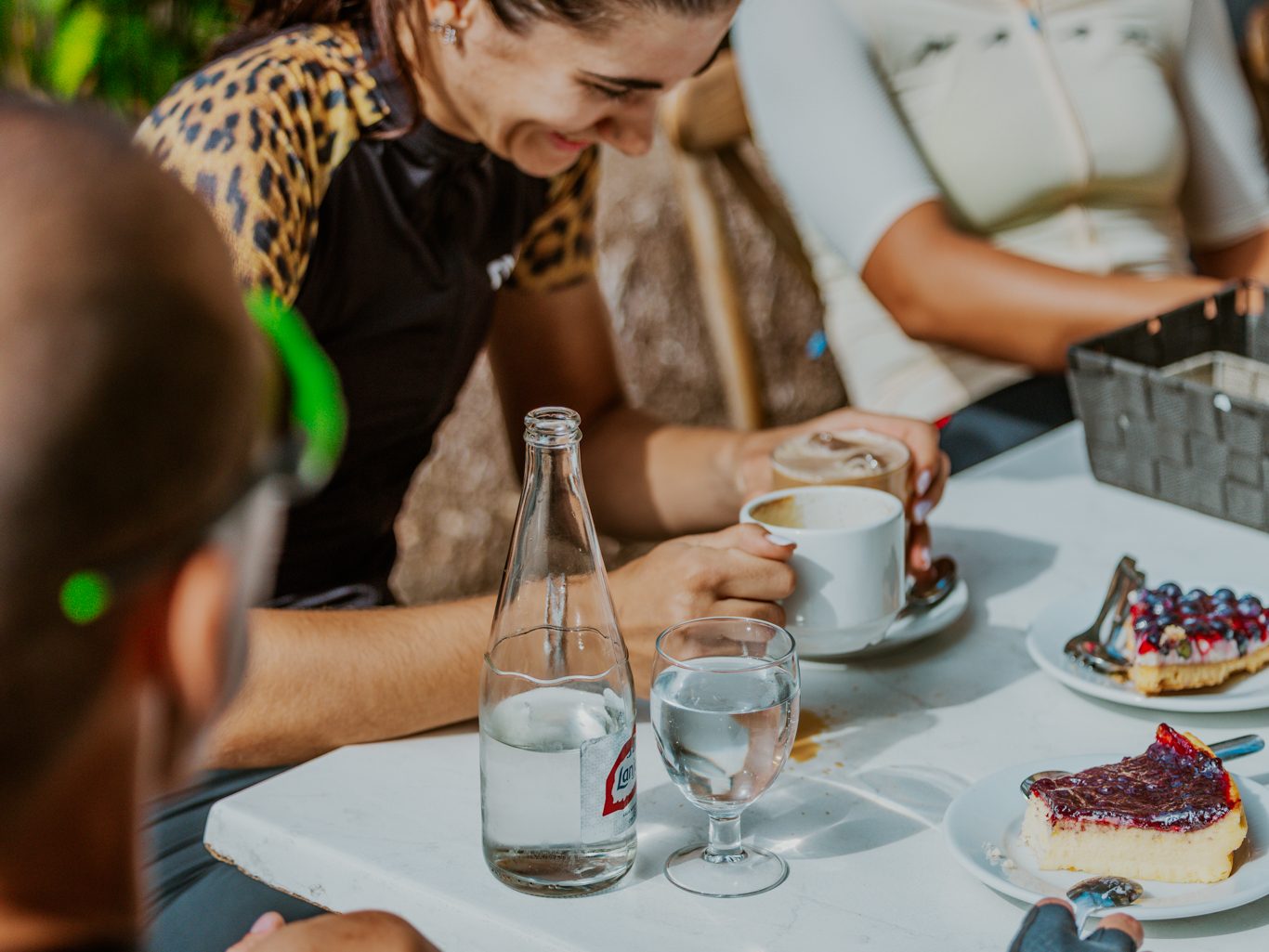
Cornering at speed, reading a crosswind on an exposed coast road, pacing a 10 km climb by feel rather than by a number on a screen: none of that happens in a garage. Neither does the part most people actually ride for. The smell of pine on a cold morning, coffee in a village square, the conversation that starts at kilometer 80 when everyone has stopped pretending they're fresh.
November and December in Mallorca are where those two things meet. You keep the structure. You lose the screen.
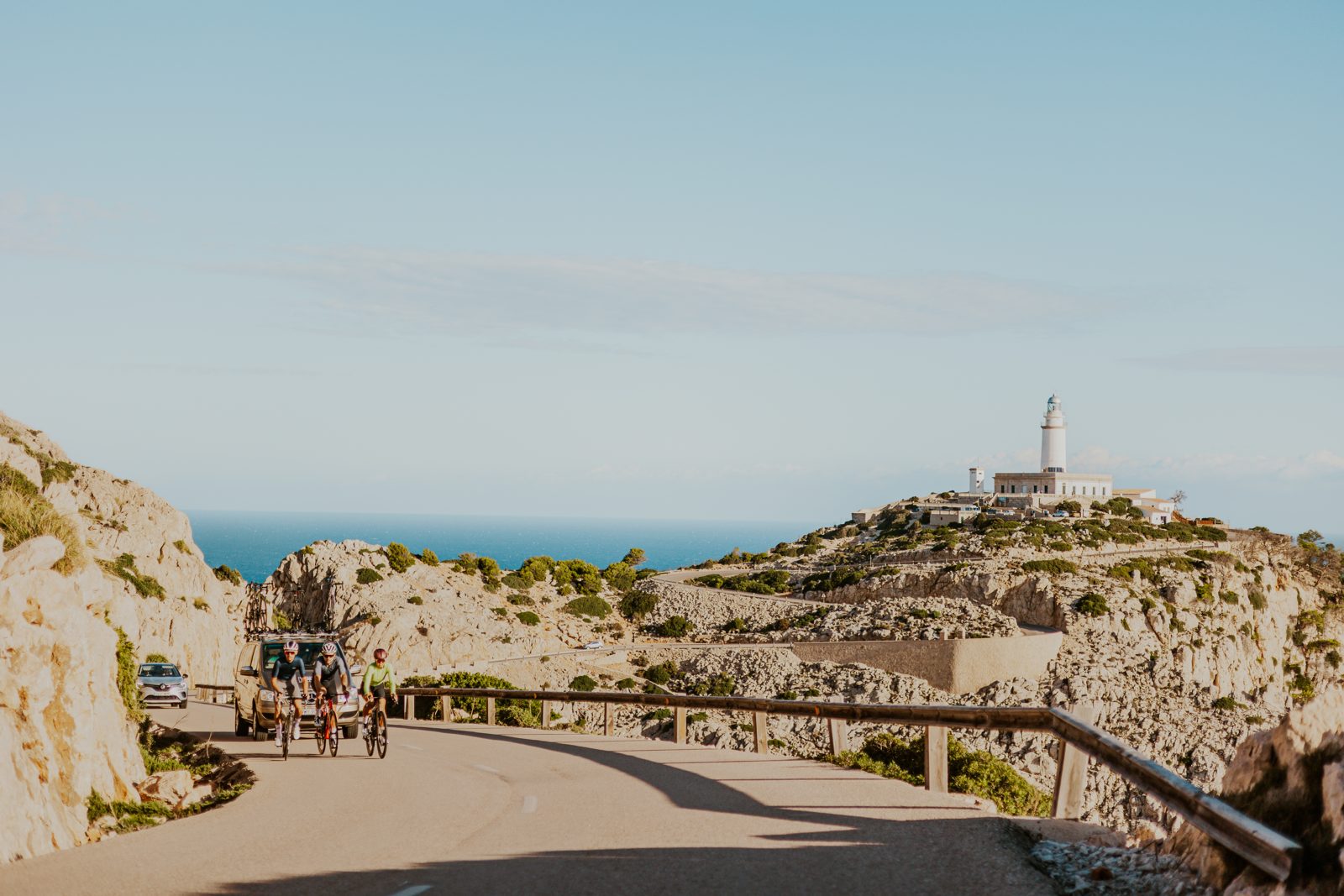
Mallorca in November and December, once the crowds have gone
The island has two cycling peaks: March to May, and late September to October. By November the big sportives are over, the hotel groups have thinned out, and the roads that are busy in April go quiet again. December is quieter still: the island slows down toward Christmas, the light is low and clear, and the lanes of the Pla are at their emptiest.
The Tramuntana is still there. Sa Calobra, the Coll de Sóller and the Puig Major road are all open, and you will often have whole sections of them to yourself. On the other side of the island, the Pla, the flat farmland in the center, becomes the best place on Mallorca for long steady base rides: rolling lanes between stone walls, almond groves, almost no cars.
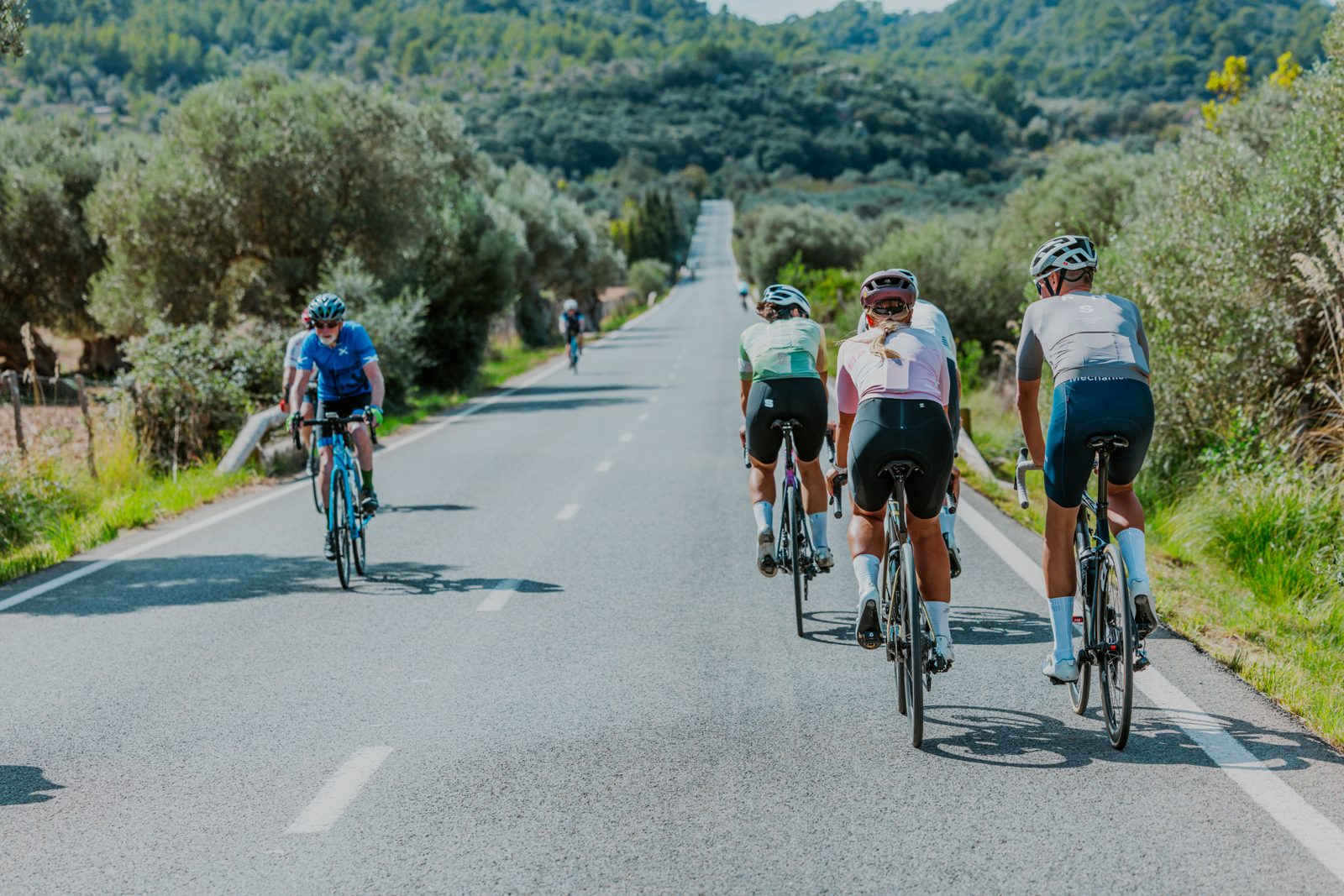
The weather is autumn, not summer. Mornings can be cool and some days bring rain. That is exactly why a guide and a van matter in November and December more than in May: you ride where the weather is good that day, not where the plan said three weeks ago.
How we build a winter base-miles week
We start with your plan, not ours. If your coach wants 18 hours of zone 2 with two threshold sessions, we build the week around that. Private guiding means the ride is yours: your pace, your intervals, your coffee stop.
The bike comes from our fleet, set up to your measurements before you land. Road or e-road, depending on how you want to ride and who you are riding with. A couple where one partner is on an e-road bike and the other is doing 5-hour days is a normal week for us.
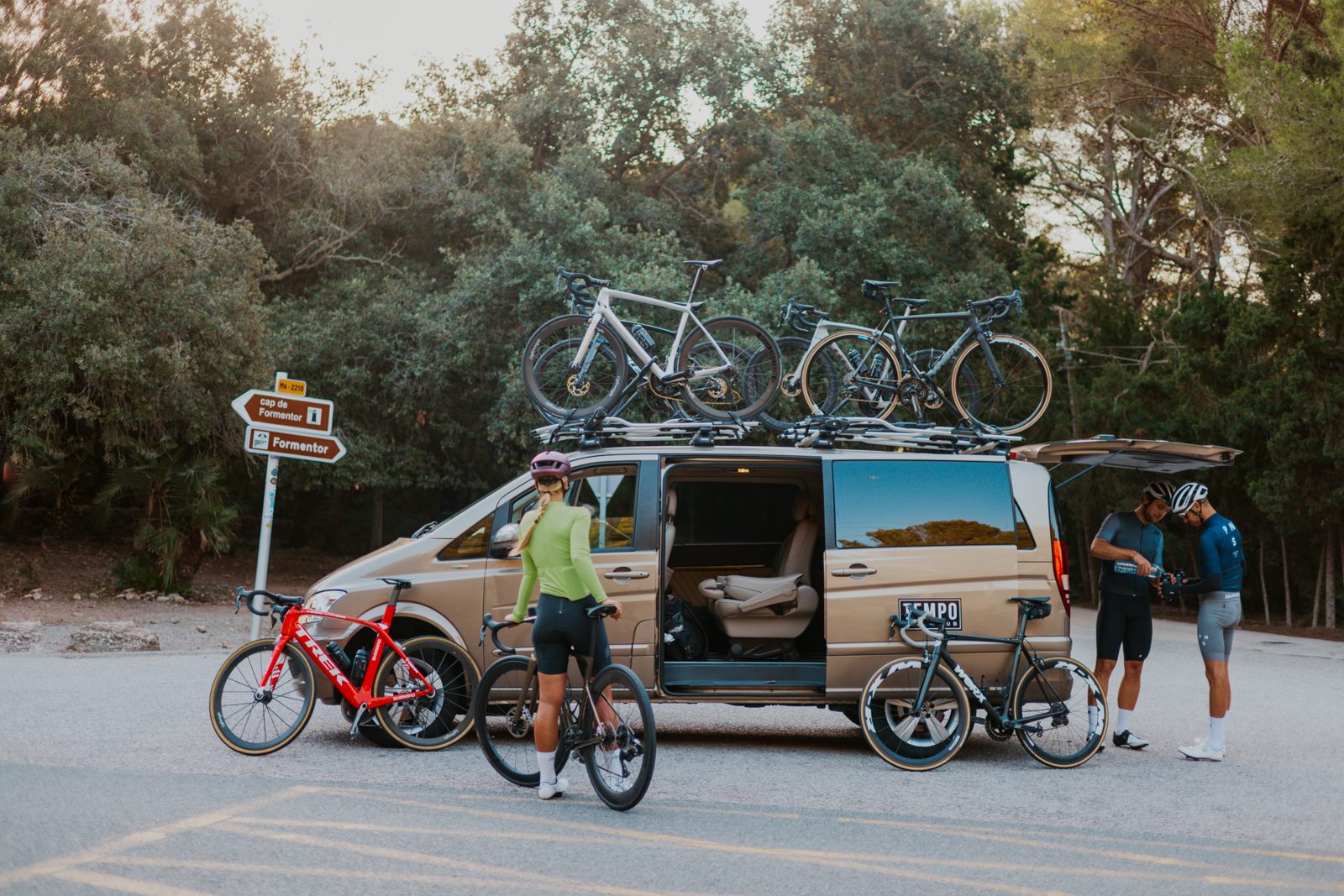
The van sits behind the group. It carries the spare wheels, the extra layers, the food, and on a day when the Tramuntana is in cloud, it carries you to the other side of the island where it isn't. It also means a 160 km day can end at a café instead of with a two-hour ride home into a headwind.
Over 500 cyclists have ridden with us. Most of the November and December ones came for structure. They went home talking about the roads.
Practical notes
- Getting here. Palma (PMI) has year-round direct flights from most UK and German cities. From the US, the usual route is a one-stop connection through Madrid, Barcelona or a major European hub. Since you ride our bikes, there is no bike bag to check.
- How long. Five riding days is the sweet spot for base miles: long enough to stack volume, short enough to go home fresh. Four is fine. Seven works for people who treat it as a block.
- What to pack. Arm and knee warmers, a light rain jacket, a gilet and a long-sleeve jersey for the morning. You will probably ride in short sleeves by midday on most days, but November and December are not July. The sun sets before 6 pm, so rides start early and finish with daylight to spare.
- What to leave at home. The bike, the tools, the route planning. That is what we are for.
Keep the trainer. Add a week outside.
Zwift+ is a good product for what it does. So is a smart trainer in a warm garage on a dark Tuesday in January. Nothing here argues against them.
But if your winter is 14 weeks long, one of them, in November or December, can be spent on real roads, in real wind, with a guide who already knows where the sun is. The structure stays. The screen stays home.
Tell us what your winter plan looks like, and we'll build the week around it. Write to info@tempocyclehub.com.